
Are custom-made carbon steel forged knives worth paying more for than mass-produced brand name knives?
If you consider yourself a chef or knife aficionado , we’re willing to bet you might not hold out much hope for an online site that sells knives. Well, in their defense, those knives aren’t meant to become a part of a knife connoisseur’s collection.
Today, we’re going to discuss some key differences between these two categories of knives.
Mass-produced knives are made to provide the most bang for the buyer’s buck. The primary goal of the manufacturer is to make a knife that will last as long as possible without giving in to the daily abuse and wear and tear of kitchen use. Not only does this keep the buyer happy, but it also helps the brand make more money by minimizing returns.
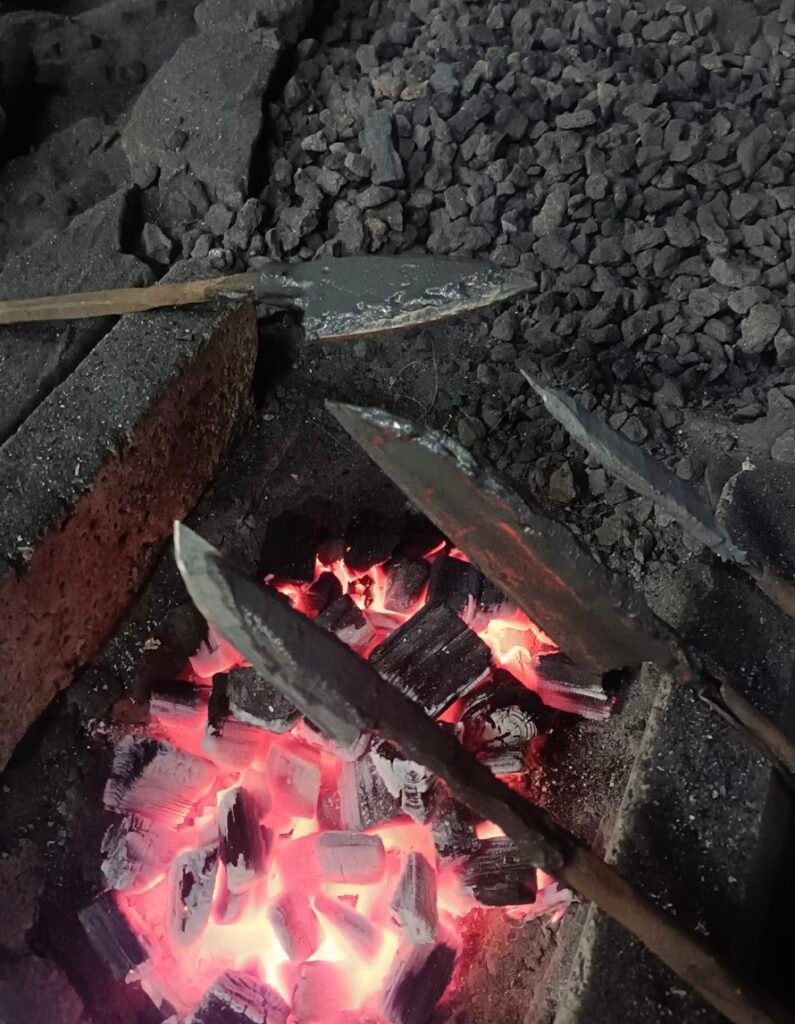
The difference between a mass-produced knife and a hand-made carbon steel forged knives lies primarily in the manufacturing process, craftsmanship, and the resulting quality and characteristics of the final product.
Here’s a breakdown of these differences:
Mass-Produced Knife:
- Manufacturing Process:
- Automation: Mass-produced knives are manufactured using automated processes, often in large quantities.
- Assembly Line: They are typically produced on assembly lines where each step of the manufacturing process is standardized and mechanized.
- Consistency: Due to automation, mass-produced knives are highly consistent in terms of design, dimensions, and specifications.
- Materials:
- Standardized Materials: Mass-produced knives often use standardized materials sourced in bulk to ensure cost-efficiency.
- Limited Variety: There may be limitations in the variety and quality of materials used compared to hand-made knives.
- Craftsmanship:
- Minimal Handwork: Little to no manual labor is involved in the production process beyond initial setup and oversight.
- Uniformity: Knives produced this way tend to lack the unique, individual characteristics that hand-made knives often exhibit.
- Cost and Accessibility:
- Affordability: Mass-produced knives are generally more affordable due to economies of scale and lower labor costs.
- Availability: They are widely available through retail outlets, online stores, and large distributors.
- Quality Control:
- Standardized Quality: Quality control measures are implemented to ensure consistency and meet specified standards across all units produced.
Hand-Made carbon steel forged Knife:
- Manufacturing Process:
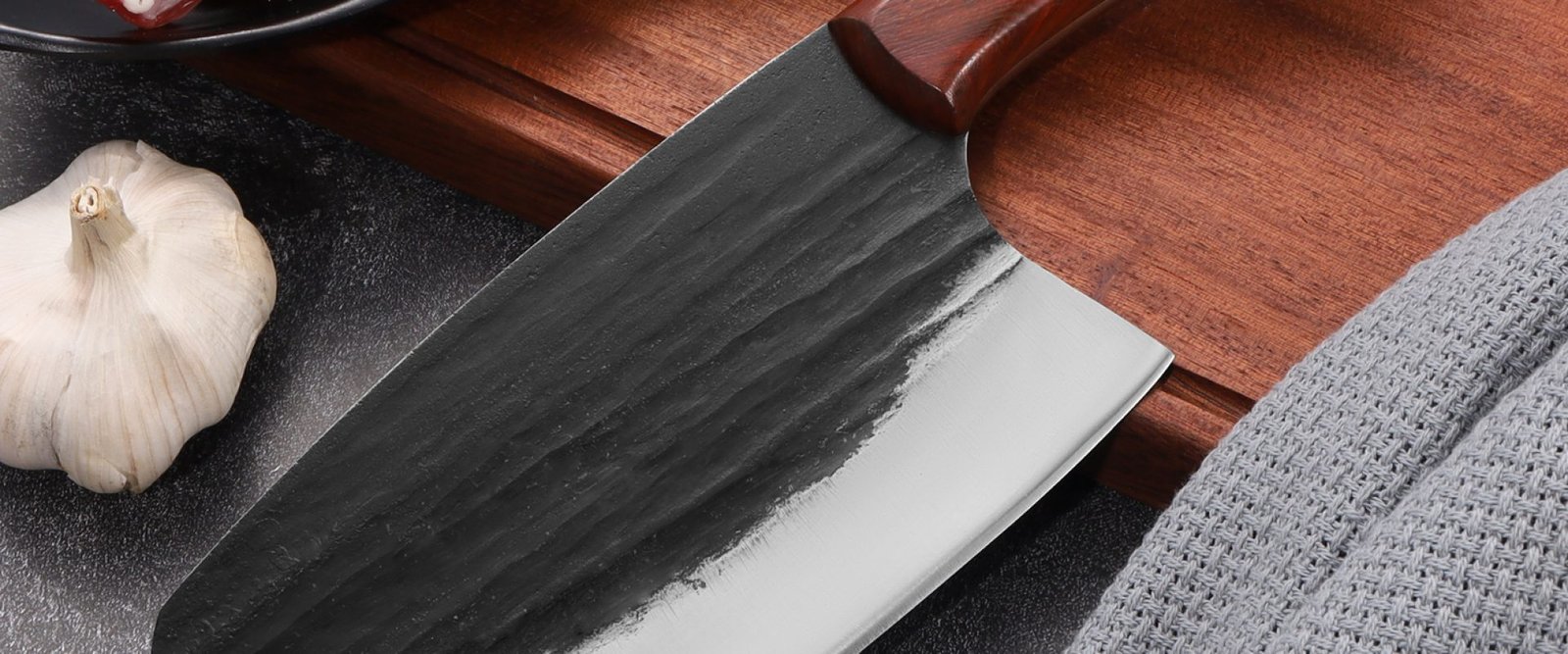
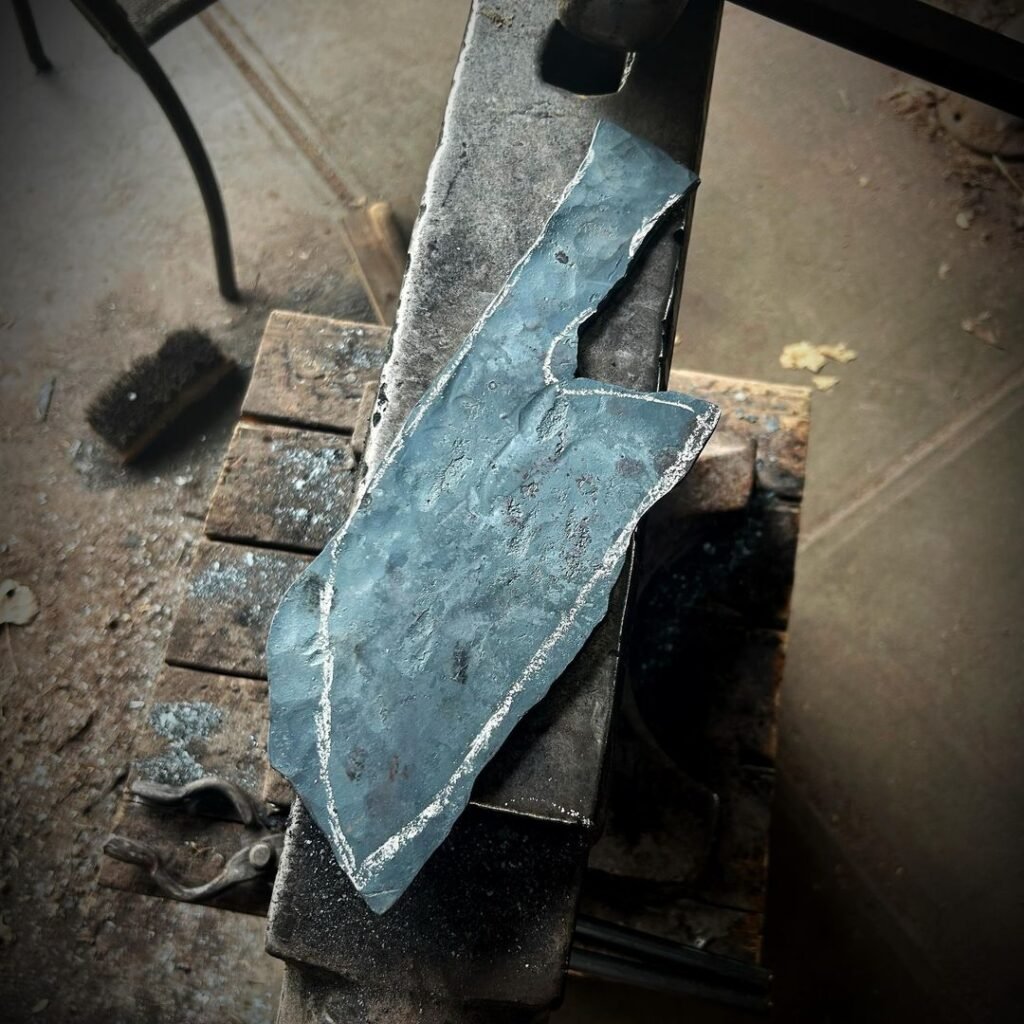
- Artisanal Craftsmanship: Hand-made carbon steel forged knives are crafted by skilled artisans or knife-makers individually or in small batches.
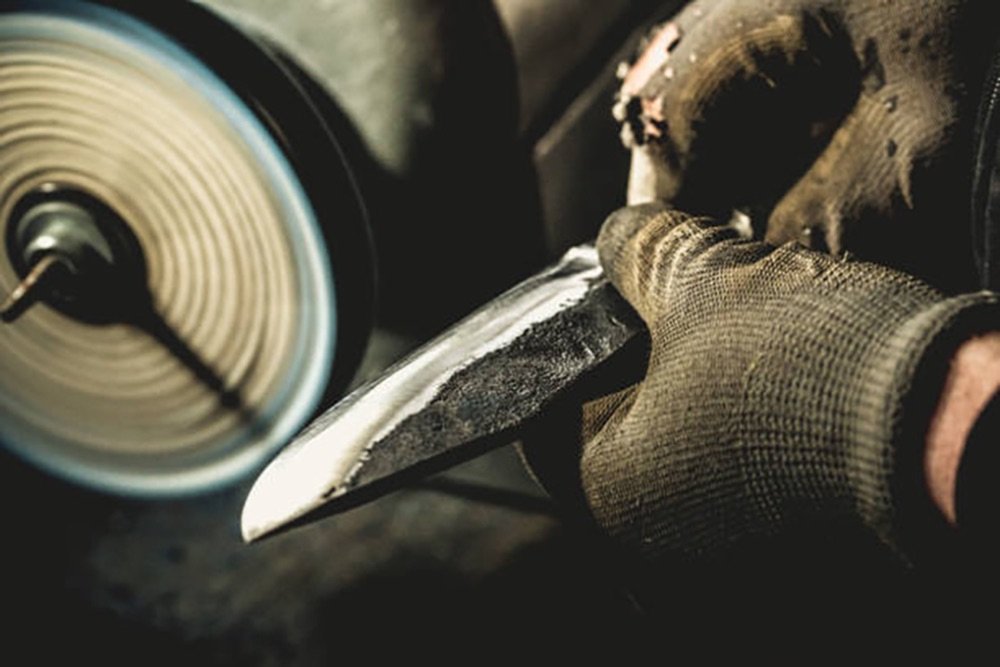
- Manual Labor: Each knife is meticulously crafted by hand, often using traditional techniques passed down through generations.
- Materials:
- High-Quality Materials: Hand-made carbon steel forged knives often use premium, carefully selected materials chosen for their performance and aesthetic qualities.
- Customization: Artisans may offer customization options for handles, finishes, and blade materials according to customer preferences.
- Craftsmanship:
- Attention to Detail: Hand-made carbon steel forged knives showcase superior attention to detail, with meticulous shaping, grinding, and finishing done manually.
- Unique Characteristics: Each knife may exhibit unique characteristics in terms of appearance, feel, and performance due to the artisan’s skill and personal touch.
- Cost and Accessibility:
- Higher Cost: Hand-made carbon steel forged knives are generally more expensive than mass-produced ones due to the labor-intensive nature of their production and the use of premium materials.
- Limited Availability: They may be available through specialized retailers, custom knife makers, or directly from artisans, often in limited quantities.
- Quality Control:
- Personal Oversight: Quality control is typically handled directly by the artisan or small workshop, ensuring high standards and attention to detail in each knife produced.
Conclusion:
Choosing between a mass-produced knife and a hand-made knife depends on your specific needs, preferences, and budget. Mass-produced knives offer affordability, consistency, and accessibility, making them suitable for everyday use or bulk purchases. On the other hand, hand-made knives boast superior craftsmanship, individuality, and high-quality materials, making them prized by collectors, chefs, and enthusiasts seeking bespoke tools with unique character and performance.
That depends on how good the blacksmith is, some are really good and make extremely good blades. Others are not so good, and have poor quality blades.