
Choosing the right barbecue knife depends on several factors, primarily related to the type of meat you’ll be handling and personal preferences. Here are some key considerations to help you choose:
- Blade Type:
- Serrated Blade: Ideal for slicing through tough cuts of meat like brisket or ribs. The serrations grip the meat, making it easier to cut.
- Straight Edge Blade: Best for cleaner cuts on tender meats like chicken or fish. It gives you more control over the thickness of each slice.
- Blade Length:
- Shorter Blade (around 6-8 inches): Great for smaller cuts or when you need more control and precision.
- Longer Blade (10-12 inches): Useful for larger cuts of meat or when you need to slice through thick portions, such as whole roasts or large briskets.
- Blade Material(sharpness)
- Stainless Steel: Common due to its durability and resistance to corrosion.
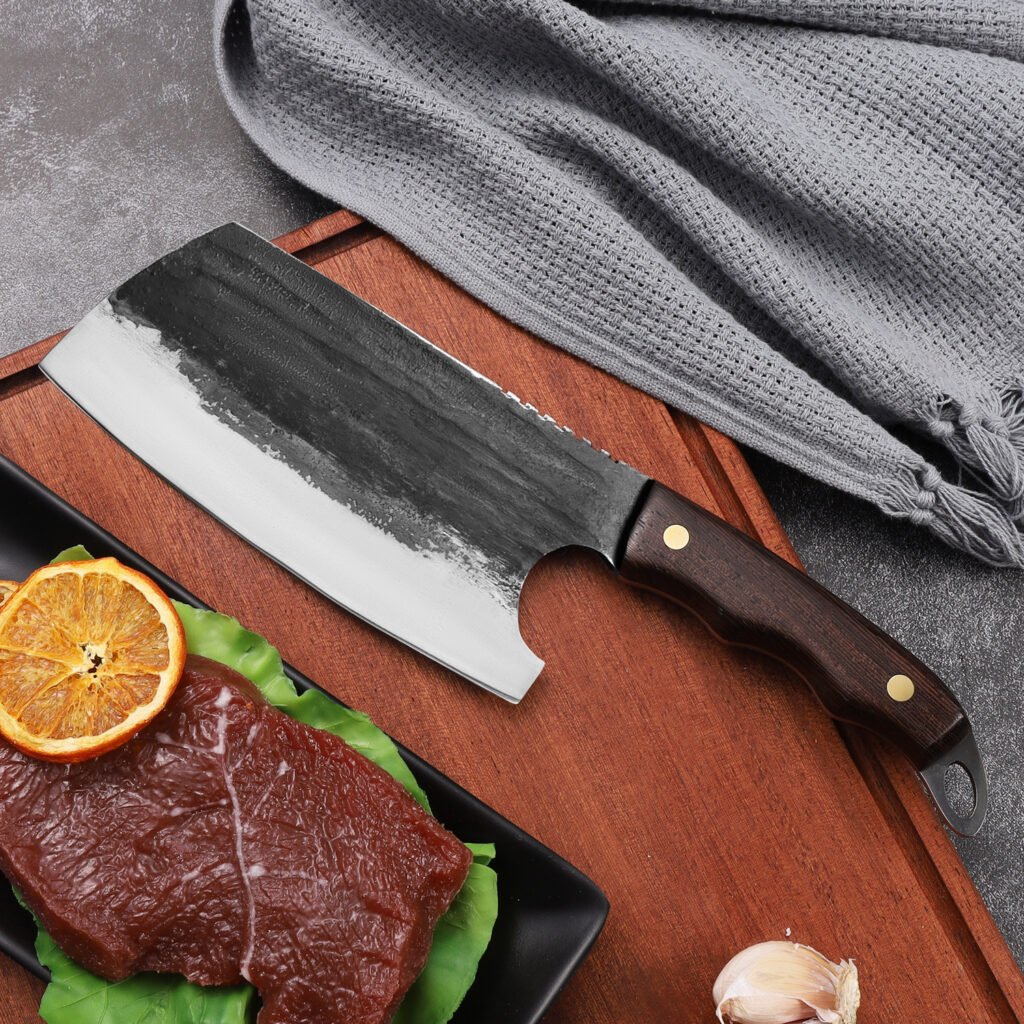
- High Carbon Steel: Known for its exceptional sharpness and edge retention, though it requires more maintenance to prevent rust. and the high carbon steel is sharper
- Handle Comfort and Grip:
- Choose a knife with a handle that feels comfortable and secure in your hand, especially since barbecue sessions can involve extended periods of cutting.
- Look for materials like wood, plastic, or composite materials that offer a good grip even when your hands might be oily or greasy.
- Flexibility:
- Consider how flexible you need the knife to be. For example, a more flexible blade is better for filleting fish or slicing around bones, while a stiffer blade might be preferable for precise cuts through tougher meats.
- Maintenance and Cleaning:
- Ensure the knife you choose is easy to clean and maintain, as barbecue can involve messy tasks. Some knives are dishwasher-safe, while others require hand-washing and immediate drying to prevent rust.
- Purpose:
- If you frequently cook large cuts of meat like brisket or whole chickens, prioritize a knife that can handle these tasks efficiently.
- If you often grill delicate items like fish or vegetables, a finer blade with a straight edge might be more suitable.
- Budget:
- Quality barbecue knives can range widely in price. Consider your budget and balance it with the quality and durability you need.
Ultimately, the right barbecue knife will depend on your specific cooking style, the types of meat you typically prepare, and your personal preferences regarding blade type, size, and handle comfort. It’s often helpful to try out a few options if possible to see which one feels best in your hand and performs well with the cuts you commonly make.
If you are interested in starting a knife project for BBQ, please contact me